
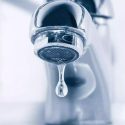
Pay Attention to Leaky Faucets
A leaky faucet may not seem like a huge problem compared to everything that could go wrong with the plumbing. However, the EPA estimates that over a trillion gallons of water are wasted annually in the US from leaks alone. This means that, on average, every household in the US has at least one plumbing leak that wastes many gallons of water a day. Many of these leaks are dripping faucets.
With all of that wasted water, leaky faucets are a big liability. Instead of paying for wastewater, homeowners should take the initiative to repair leaks when they become apparent. Compared to the severity of the problem, leaky faucet repairs are cheap and easy. Here are some tips to help homeowners repair their faucets or, at the very least, understand how a plumber will perform repairs.
Symptoms of a Damaged O-Ring
 The inside of a faucet is a mystery to most people and an overwhelmingly complex device to others. But the principles of what makes a water faucet work are fairly simple. Since each valve is the same, one only has to understand one valve to properly troubleshoot faucet leaks.
One of the most perplexing faucet leaks is when water leaks around the handles of the faucet. This problem is solved by replacing the o-ring in the faucet. The O-ring is a small rubber seal around the faucet's stem. Its purpose is to keep water from flowing up the valve stem when the sink handle turns and water flows from the spigot. When friction causes it to wear out, water will dribble out around the valve handle.
To diagnose this problem, turn off the water at the shut-off valves and remove the valve cartridge. The O-ring will be around the cartridge above the washers and the handle seat.
What Causes Worn-Out Washers?
Washers are half of the mechanism that cuts off flow from a faucet. These rubber or neoprene washers press down into the valve seat to stop the water flow or pull away from the valve seat as the handle is turned for water. With every turn of the faucet handle, these devices wear down. After a few years of constant use, washers will wear out and allow water to seep past them and leak from the faucet.
In most sinks, the washer is located at the lowest part of the valve cartridge. To replace them, remove the cartridge and the screw holding the washer. Replace with a washer of identical dimensions and reinstall.
Damaged Valve Seats
 Valve seats are the other half of the equation for fixing faucet leaks. After years of rubber and neoprene washers pressing into valve seats, these structures can build up corrosion or suffer from pitting. When the valve seat is compromised, the symptoms will be identical to a bad washer. Replacing the o-rings and washers in a faucet helps to replace the valve seats as well. By replacing all three simultaneously, the faucet will be as good as new.
About B&L Plumbing and Heating
B&L Plumbing and Heating is a veteran-owned business offering tailored plumbing solutions. They serve residential and commercial customers and never charge after-hours fees. Call today for superior plumbing service in Colorado Springs, CO.
)
)
)

 Spring can be such an exciting time! People come out of their winter hibernation stage, the flowers start to bloom, and the parks and beaches start to fill with people. But as mentioned, the springtime can bring some heavy rains, which impacts the plumbing system.
 Adding to the damage that underground pipes can see from heavy rains, saturated soil can also lead to dangerous
 )
)
)
)